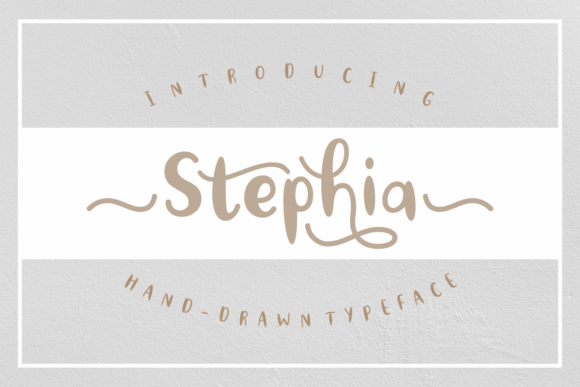
Stephia: A Handwritten Font That Brings Personality to Design
In the world of typography, the choice of a font can make or break a design. While many fonts are created with precision and uniformity in mind, there's a growing appreciation for those that carry a sense of individuality and warmth. One such font is Stephia, a handwritten typeface that brings a cutesy and charming aesthetic to any project. Whether you're designing a logo, crafting a social media post, or adding a personal touch to a document, Stephia offers a unique blend of creativity and professionalism.
What sets Stephia apart from other fonts is its handcrafted feel. Unlike digital fonts that often appear rigid and mechanical, Stephia mimics the natural flow of handwriting. This makes it ideal for projects that require a more personal and approachable look. Its subtle imperfections and fluid lines give it a human touch, making it perfect for branding that aims to connect on an emotional level.
The versatility of Stephia is another reason it has gained popularity among designers and creators. It works well in both digital and print formats, and its legibility remains consistent across different sizes and applications. Whether used as a headline or a body text, Stephia maintains its charm without sacrificing readability. This makes it a go-to choice for a wide range of design needs.
Characteristics of Stephia
One of the most notable characteristics of Stephia is its cutesy style. The font features soft curves, gentle slopes, and a slightly uneven baseline, which together create a whimsical and playful appearance. These elements make it particularly appealing for designs targeting younger audiences or those looking to convey a sense of fun and creativity.
Another key feature is its handwritten quality. Unlike traditional serif or sans-serif fonts, Stephia does not follow a strict structure. Instead, it mimics the natural variations found in human handwriting, giving each letter a unique personality. This irregularity adds depth and character to the design, making it stand out from more conventional typefaces.
The font also includes a variety of ligatures and alternate characters, allowing for greater customization and flexibility. Designers can choose from different versions of certain letters to suit the specific needs of their project. This level of adaptability ensures that Stephia can be tailored to fit a wide range of design styles and themes.
Advantages of Using Stephia
One of the main advantages of using Stephia is its ability to add a professional yet approachable tone to any design. In a world where many brands rely on sleek and minimalist fonts, Stephia offers a refreshing alternative that feels more authentic and relatable. This can be especially beneficial for businesses that want to build a stronger connection with their audience.
Another benefit is its suitability for a wide range of applications. From website headers and social media graphics to business cards and packaging, Stephia can be used in various contexts without losing its visual appeal. Its adaptability makes it a valuable asset for designers who need a versatile font that can work across multiple platforms and mediums.
Additionally, Stephia is easy to use and integrate into design software. Most graphic design tools support custom fonts, and Stephia is no exception. Once installed, it can be accessed just like any other font, making it a convenient option for both beginners and experienced designers.
Use Cases for Stephia
Stephia is particularly well-suited for branding and marketing materials. Its cutesy style makes it ideal for startups, creative agencies, and small businesses looking to establish a distinct identity. When used in logos or promotional content, it can help convey a sense of innovation and originality.
It is also a great choice for educational and children’s content. The playful nature of the font can make learning materials more engaging and visually appealing. Teachers and educators can use it to create worksheets, presentations, and other resources that capture the attention of young learners.
For personal projects, such as wedding invitations, greeting cards, and handmade crafts, Stephia adds a special touch that enhances the overall aesthetic. Its handwritten appearance gives these items a more personalized and heartfelt feel, making them more meaningful to the recipient.
Considerations When Using Stephia
While Stephia offers many benefits, it's important to consider its limitations. Due to its handwritten style, it may not be the best choice for large blocks of text. In such cases, it's advisable to pair it with a more readable font to ensure clarity and legibility.
Another consideration is the context in which it is used. Stephia may not be appropriate for formal or corporate settings where a more traditional font would be expected. However, for creative and casual environments, it can be a powerful tool for expressing personality and style.
Designers should also be mindful of how Stephia interacts with other design elements. Its unique characteristics can sometimes clash with bold colors or complex layouts, so it's essential to test different combinations to achieve the desired effect.
Stephia in the Broader Design Landscape
In the broader design landscape, Stephia represents a growing trend toward more expressive and personalized typography. As consumers become more discerning, there is an increasing demand for fonts that reflect individuality and creativity. Stephia meets this demand by offering a unique alternative to standard typefaces.
Its popularity also highlights the importance of authenticity in design. In an era dominated by digital perfection, Stephia reminds us that imperfection can be beautiful. By embracing the natural variations of handwriting, it challenges the notion that all fonts must be flawless and uniform.
As more designers and businesses seek to differentiate themselves, fonts like Stephia will continue to play a significant role in shaping visual identity. Whether used for branding, communication, or artistic expression, it offers a fresh and distinctive approach to typography that resonates with a wide audience.