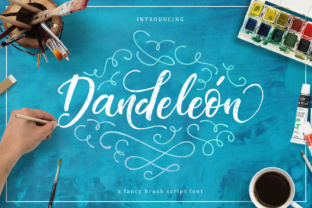
Dandeleón: A Handmade Script Font for Creative Projects
Dandeleón is a script font that offers a unique, hand-lettered aesthetic, making it ideal for designers seeking a personal and artistic touch in their work. This calligraphy-style typeface features an inky, organic look that mimics the natural flow of handwriting, giving designs a warm, handmade appeal. Its versatility allows it to be used across various design projects, from branding and logos to invitations and packaging.
What Is Dandeleón?
Dandeleón is a digital font that emulates the visual characteristics of handwritten script. It is designed with fluid strokes and subtle imperfections that create a sense of authenticity. Unlike more rigid or mechanical fonts, Dandeleón brings a human element to typography, which can be particularly valuable in projects that aim to convey creativity, warmth, or individuality.
The font is often used in graphic design, web development, and print media where a personalized feel is desired. Its structure makes it easy to read while still maintaining a decorative quality, allowing it to function as both a headline and body text option in certain contexts.
Why Someone Might Be Interested in Dandeleón
Designers and creatives may choose Dandeleón for its ability to add a tactile, artisanal quality to their work. The font's appearance can evoke a sense of nostalgia or craft, making it suitable for projects that aim to connect with audiences on an emotional level. For example, it might be used in wedding invitations, art galleries, or boutique branding to reinforce a theme of uniqueness and care.
Additionally, Dandeleón’s ease of use makes it accessible to both novice and experienced designers. It can be integrated into design software like Adobe Illustrator, Photoshop, or Canva without requiring advanced typographic skills. This accessibility helps users quickly experiment with different visual styles and find the right tone for their project.
Benefits of Using Dandeleón
One of the primary benefits of Dandeleón is its ability to enhance the visual storytelling of a design. The font’s organic shape and flowing lines can help create a narrative that feels more personal and engaging. This is especially useful in marketing materials, where a strong visual identity can make a lasting impression on consumers.
Another advantage is its adaptability. While Dandeleón is primarily a script font, it can be paired with other typefaces to balance its ornate style. For instance, combining it with a sans-serif font can create a modern yet warm aesthetic, which is popular in contemporary design trends.
Furthermore, the font’s readability is generally good when used appropriately. While it may not be ideal for long blocks of text, it works well for headlines, titles, and short phrases, ensuring that the message remains clear and impactful.
Tradeoffs and Considerations
Despite its strengths, Dandeleón may not be the best choice for every project. Its stylized appearance can sometimes be too distinctive, potentially overpowering the overall design if not used thoughtfully. In cases where minimalism or clarity is the priority, a simpler font may be more effective.
Another consideration is the font’s availability. Depending on the platform or design tool being used, Dandeleón may not be included by default, requiring users to download or purchase it separately. This could be a barrier for those who are looking for immediate access to a wide range of typefaces.
Additionally, while Dandeleón offers a handmade look, it may not fully replicate the nuances of actual calligraphy. Designers who require a highly authentic, hand-drawn effect may need to supplement the font with custom illustrations or additional design elements.
Situations Where Dandeleón Is a Strong Fit
Dandeleón is particularly well-suited for projects that emphasize creativity, craftsmanship, or a personal touch. It can be an excellent choice for branding initiatives that aim to stand out in a competitive market. For instance, a small business owner launching a new line of handmade products might use Dandeleón to reinforce the brand’s artisanal identity.
It is also effective in editorial design, such as magazine layouts, book covers, or social media graphics, where visual interest and personality are key. In these contexts, the font can help draw attention and create a memorable visual experience for the audience.
Moreover, Dandeleón is ideal for seasonal or thematic designs, such as holiday cards, event invitations, or promotional materials. Its aesthetic aligns well with themes that celebrate artistry, nature, or tradition, making it a versatile option for a variety of creative applications.
Situations Where Alternatives May Be Worth Considering
In some cases, alternative fonts may offer better results depending on the specific needs of a project. For example, if a designer requires a font that is more legible at smaller sizes, a more structured script or a serif font might be preferable. Similarly, if the goal is to maintain a clean, professional look, a minimalist sans-serif typeface could be more appropriate.
For projects that demand high levels of customization or unique typographic effects, a custom-designed font or a more flexible typeface may be necessary. These options allow for greater control over the visual outcome but may require more time and resources to implement effectively.
Additionally, when working within strict brand guidelines or for large-scale publications, consistency and uniformity are often prioritized. In such scenarios, a standard typeface may be more practical than a highly stylized font like Dandeleón.
Decision-Making Insights for Designers
When deciding whether to use Dandeleón, designers should consider the project’s goals, audience, and context. Asking questions such as “Does this font align with the intended message?” or “Will it enhance the visual hierarchy?” can help determine its suitability.
Testing the font in different formats and sizes is also recommended. This allows designers to see how it performs in real-world applications and whether it meets the project’s requirements. Experimentation can reveal insights that may not be immediately apparent from a static preview.
Finally, understanding the broader design ecosystem is important. Ensuring that Dandeleón complements other design elements, such as color schemes, imagery, and layout, will contribute to a cohesive and effective final product.